How Synthetic Turf Became a Market
Today's synthetic turf companies manufacture, distribute, and install a product that customers already recognize - it's easy to assume the market simply exists. But someone had to introduce the idea of replacing natural grass with a manufactured surface, persuade institutions to use it, work through its early limitations, bring the cost down, and eventually convince homeowners that artificial grass belonged somewhere other than a stadium. The honest answer to who created that demand isn't AstroTurf, or China, or drought, or advertising - each of those expanded the market in a different way, at a different time, and no single one explains the whole thing.
Quick Navigation
Synthetic Turf Demand Had to Be Created
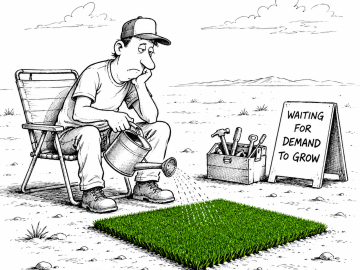
Synthetic turf is a discretionary good, not a necessity good, and that distinction matters when talking about demand in this industry. People need food, clothing, shelter, and other necessities whether individual companies market them or not. No comparable underlying need guarantees that someone will buy synthetic turf. A homeowner can keep natural grass. A school can maintain a natural field. A city can choose another surface or decide not to build the project at all.
That has been true from the beginning. The origin of synthetic turf started with a concern about how little safe recreational space existed for kids in American cities - not with customers already looking for an artificial alternative to grass.
In 1958, the Ford Foundation established the Educational Facilities Laboratories (EFL) to find better school environments, including durable surfaces that could hold up in urban schoolyards where grass wouldn't survive. In the early 1960s, EFL encouraged Monsanto's Chemstrand division to develop and test a synthetic playing surface that could meet that need. By 1964, Chemstrand had a product - ChemGrass - installed at Moses Brown School in Providence, Rhode Island.
It didn't scale from there, at least not the way it was intended to. ChemGrass was expensive to produce, which made it unsuitable for exactly the inner-city playgrounds it had been designed for.
The earliest synthetic turf, in other words, wasn't a response to an established market for artificial grass. A problem existed. A potential solution was developed for it. The market for that solution still had to be created.
The Astrodome Turned a Product Into a Category
What research couldn't provide, a stadium roof accidentally did: visibility.
When Houston's Astrodome opened in 1965, its translucent roof created so much glare that management painted over sections of the roof panels - and the natural grass below died without sufficient sunlight.
Televised sports gave the installation something an experimental school surface never had: a national audience. Millions of people who had never heard of synthetic turf watched it under stadium lights, and the installation gave sportswriters, broadcasters, players, and facility managers something concrete to react to - much of it, at first, unflattering. (Leo Durocher's line about a "10-cent infield" in a "$45 million ballpark" was one of the kinder reviews.)
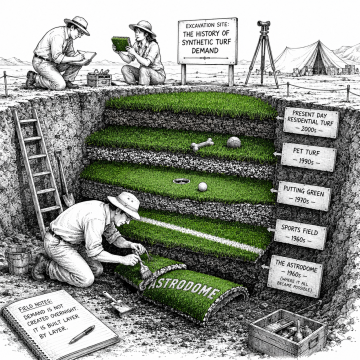
The Astrodome didn't just purchase synthetic turf. It made synthetic turf culturally visible - a different, and in some ways more valuable, thing than making it popular. AstroTurf got the category a name and a foothold in the public imagination well before it had earned broad approval.
Sports Institutions Built Legitimacy and Recurring Demand
A single visible installation doesn't build a market on its own. What followed the Astrodome was slower and less dramatic: professional stadiums, universities, schools, municipalities, and recreation departments adopted synthetic surfaces because they held up to constant use, needed less recovery time, and delivered more consistent playing conditions than grass fields worn down by heavy scheduling.
Every one of those installations became evidence that the product could do real operational work, not just make headlines. At the same time, early and legitimate complaints - about hardness, heat, traction, and injury risk - created pressure for the industry to improve the product rather than rely on its novelty.
Adoption and product development reinforced each other in a loop: institutions created recurring purchases, visible fields normalized the category, practical complaints drove technical innovation, and improved systems made the next round of adoption possible. AstroTurf had created the awareness. Institutional use is what turned that awareness into an actual functioning market.
Better Products and Lower Costs Expanded the Market
The synthetic turf sold to stadiums in the 1960s bears little resemblance to what gets installed in a backyard today. New fibers, longer blades, infill systems, drainage layers, and backing technology - developed over decades - made turf viable for applications the original short-pile stadium carpet was never suited for: landscapes, putting greens, playgrounds, pet areas, rooftops, commercial properties.
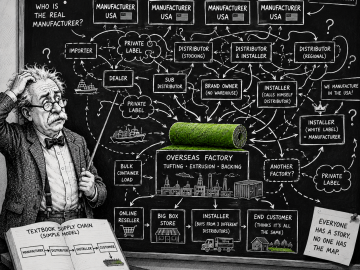
Global manufacturing, particularly the growth of Chinese production, then did something different: it lowered the cost of the product and widened the range of options available. Importers and distributors made turf accessible to smaller contractors and residential customers who had never been part of the original market at all.
It's worth keeping those two forces separate, because they solved different problems. Product innovation expanded what turf could be used for. Lower-cost manufacturing expanded who could afford to supply and buy it. Neither one, by itself, guaranteed that anyone would actually want it - they just removed the barriers standing between an interested buyer and a purchase.
Drought and Visible Projects Brought Turf Home
Another major expansion of demand happened close to home, literally. A combination of forces pulled synthetic turf out of stadiums and into residential and commercial landscapes: drought and water scarcity, irrigation restrictions and rising water costs, the ongoing expense of maintaining a natural lawn, changing attitudes about low-water landscaping, more realistic-looking products, pet and recreational uses, and - increasingly - social media and home-improvement content showing what a finished project could look like.
Government and water-agency messaging helped establish lawn replacement as a legitimate conservation question in the public mind, even when the specific rebate programs didn't reward synthetic turf directly. Southern California provides an instructive example. The Metropolitan Water District's SoCal WaterSmart program - and LADWP's enhanced local rebate offered through it - pay residents to remove irrigated lawns, but current project requirements favor planted, water-efficient landscapes rather than synthetic turf. The policy conversation raised the category's profile even in places where the policy itself didn't include it.
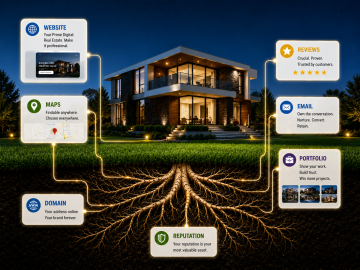
From there, installers became the local demand creators the category needed. A finished yard, putting green, pet area, or playground let a prospective buyer see the product in a familiar setting - a neighbor's yard - instead of a stadium. The industry didn't just import sports turf into residential markets. It gave property owners an expanding set of reasons to reconsider what a lawn could be.
What This History Leaves Unanswered
No single company, campaign, or environmental trend created the demand for synthetic turf. It accumulated over more than six decades as different forces solved different parts of the adoption problem: research produced the original surface, the Astrodome made it visible, institutions made it credible, better materials made it versatile, global manufacturing made it more accessible, and drought, water policy, and visible projects gave property owners new reasons to consider it.
Today's industry inherited the market those forces built. Every manufacturer, distributor, franchise, and installer selling synthetic turf benefits from decades of investment, exposure, innovation, institutional adoption, public policy, and completed projects.
But inherited demand is not permanent. The forces that expanded the market in the past cannot be expected to keep producing the next customer automatically. Synthetic turf products are now widely available. The question facing the industry is who will ensure the market continues to understand them, prefer them, and want them.
Continue reading: How Demand Works in the Synthetic Turf Industry