
Demand Infrastructure
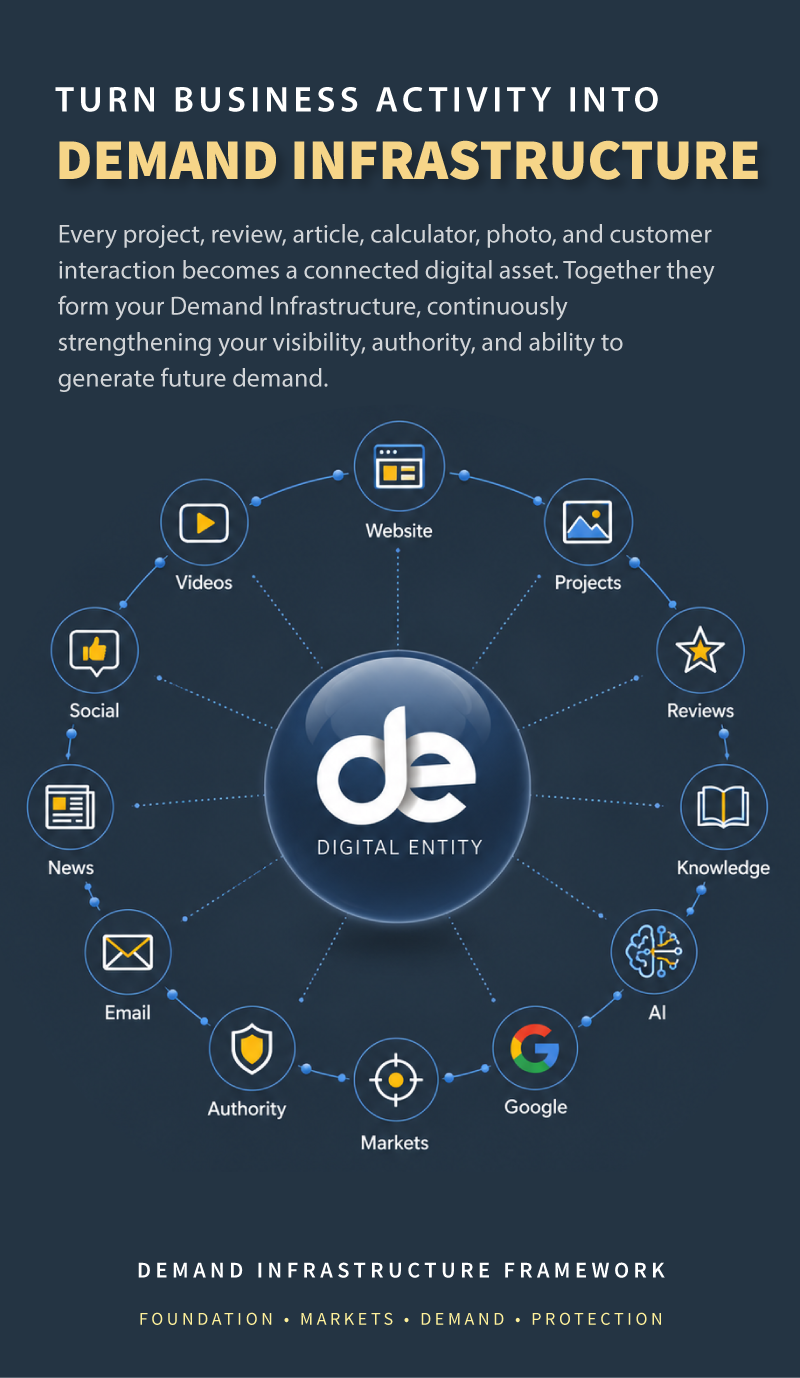
Demand Infrastructure is the business system that continuously creates, captures, and strengthens customer demand by organizing, connecting, and leveraging a company's Digital Entity.
Unlike campaign-based marketing, which often relies on individual campaigns or advertising budgets, Demand Infrastructure grows stronger over time. It transforms the information your business creates every day into connected digital assets that increase visibility, authority, customer trust, and market reach. As your Digital Entity expands, your ability to attract, educate, and convert future customers grows with it.
What Is Demand Infrastructure?
Demand Infrastructure is the business infrastructure responsible for creating customer demand before sales and operations begin. It consists of the digital assets your business owns - such as projects, customer reviews, knowledge, videos, market pages, calculators, and industry expertise - that help customers discover, evaluate, and choose your business.
Unlike advertising campaigns that disappear when budgets end, Demand Infrastructure grows as your business grows. Every completed project, customer interaction, and piece of operational knowledge has the potential to become a permanent digital asset that continues generating business value long after it was created.
Demand Infrastructure creates opportunities. Supply Infrastructure fulfills them. The interaction between these two systems generates the projects, customer knowledge, reviews, and digital assets that continue strengthening your business over time.
The Two Systems That Drive Business Growth
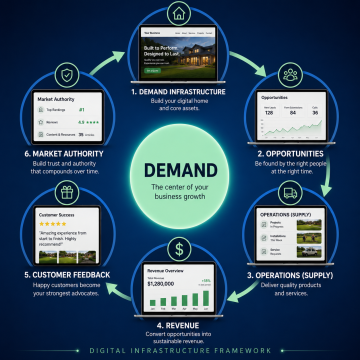
Demand is the central driver of every business. Demand Infrastructure is the business system that continuously creates, captures, and strengthens customer demand. It builds market visibility, establishes customer trust, and generates qualified opportunities that fuel business growth. Supply Infrastructure then fulfills that demand by coordinating operations, delivering products and services, and transforming opportunities into revenue. Every completed project, customer interaction, and operational improvement strengthens the business and contributes to future demand.
Business systems that create and strengthen customer demand.
✓ Create customer demand
✓ Generate qualified opportunities
✓ Build market visibility
✓ Strengthen authority and trust
✓ Expand market reach
✓ Increase future revenue
Business systems that fulfill customer demand.
✓ Fulfill customer demand
✓ Deliver products & services
✓ Manage inventory
✓ Coordinate teams
✓ Produce quality work
✓ Build customer relationships
The Business Growth Cycle
Traditional business models often treat a completed project as the end of the sales process. Once the work is delivered, the project generates revenue, and the cycle starts over with the next marketing campaign.
Demand Infrastructure extends that cycle.
Every completed project creates valuable operational assets - from customer reviews and project photos to technical knowledge, installation methods, videos, FAQs, and documented expertise. Rather than allowing these assets to remain scattered across phones, emails, cloud storage, or individual employees, they are organized within your Digital Entity and transformed into permanent business assets.
As your Digital Entity grows, these assets continuously strengthen your Demand Infrastructure. They expand your project library, improve market coverage, answer customer questions, support sales conversations, increase search and AI visibility, and build long-term authority. Every completed project therefore contributes not only to today's revenue, but also to tomorrow's customer demand.
This creates a continuous business growth cycle:
- Demand Infrastructure creates customer demand and business opportunities.
- Supply Infrastructure fulfills that demand through products, services, and customer relationships.
- Operations generate valuable business knowledge and digital assets.
- Digital Assets strengthen your Demand Infrastructure and create future demand.
Unlike campaign-based marketing, where visibility often declines when campaigns stop, Demand Infrastructure becomes stronger as your business grows. Every completed project adds another permanent asset to your Digital Entity, increasing its value and improving your ability to attract, educate, and convert future customers.
The result is a self-reinforcing business system where operations don't simply fulfill demand - they continuously create the assets that generate future demand.
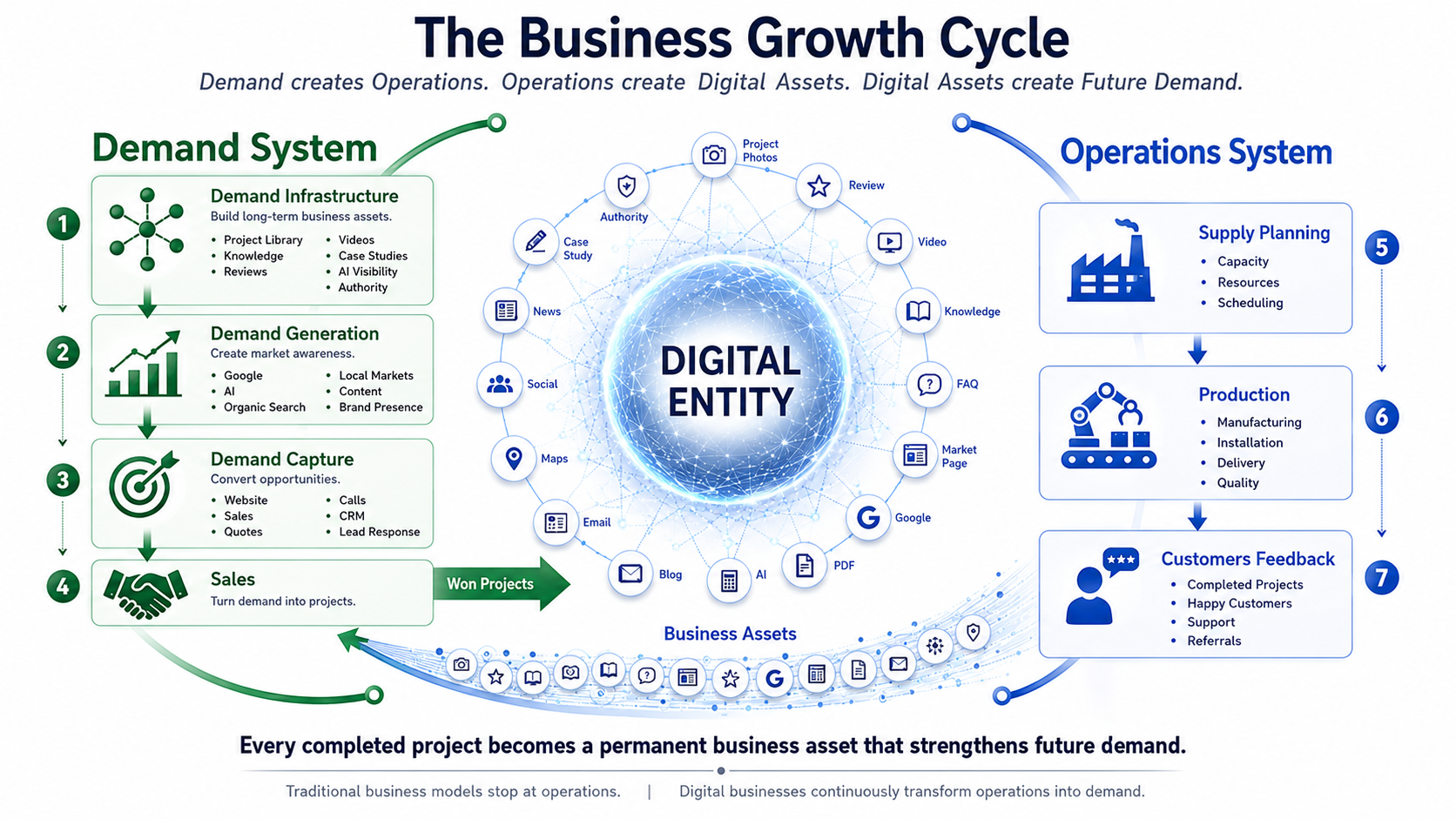
Every completed project should create more than revenue. It should create permanent business assets that your sales, marketing, and operations teams can use to generate future demand.
The Four Components of Demand Infrastructure
Demand Infrastructure isn't built through a single marketing tactic or technology. It's a connected system of digital assets, business processes, and operational knowledge that grows stronger over time. These four components work together to create, expand, protect, and continuously strengthen customer demand.
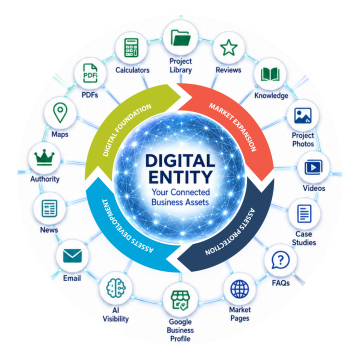
1. Digital Foundation
Build the digital foundation that represents your business.
Every Demand Infrastructure begins with a strong Digital Entity Foundation. The Digital Entity Foundation creates a structured digital representation of your business by capturing, organizing, and connecting the information generated through daily operations. It establishes a single foundation for your business data, knowledge, content, and digital presence, allowing your website and other digital channels to present consistent, connected information. Without a Digital Entity Foundation, business information remains fragmented across websites, cloud storage, software platforms, and individual devices, limiting your ability to build and scale Demand Infrastructure.
2. Market Expansion
Deploy your digital assets across every market you serve.
Digital assets become more valuable when they're organized around the customers, locations, products, and industries you serve. Project libraries, market pages, knowledge articles, calculators, and customer resources allow your business to expand into new markets while continuously increasing visibility, authority, and customer trust.
3. Asset Protection
Protect the business assets you've already created.
Your Demand Infrastructure represents years of accumulated knowledge, authority, customer trust, and digital equity. Protecting your website, search visibility, domain authority, content, and technical infrastructure ensures these assets continue generating business value as technology, search engines, and customer behavior evolve.
4. Continuous Asset Development
Capture new digital assets, knowledge, and operational intelligence from everyday business activities.
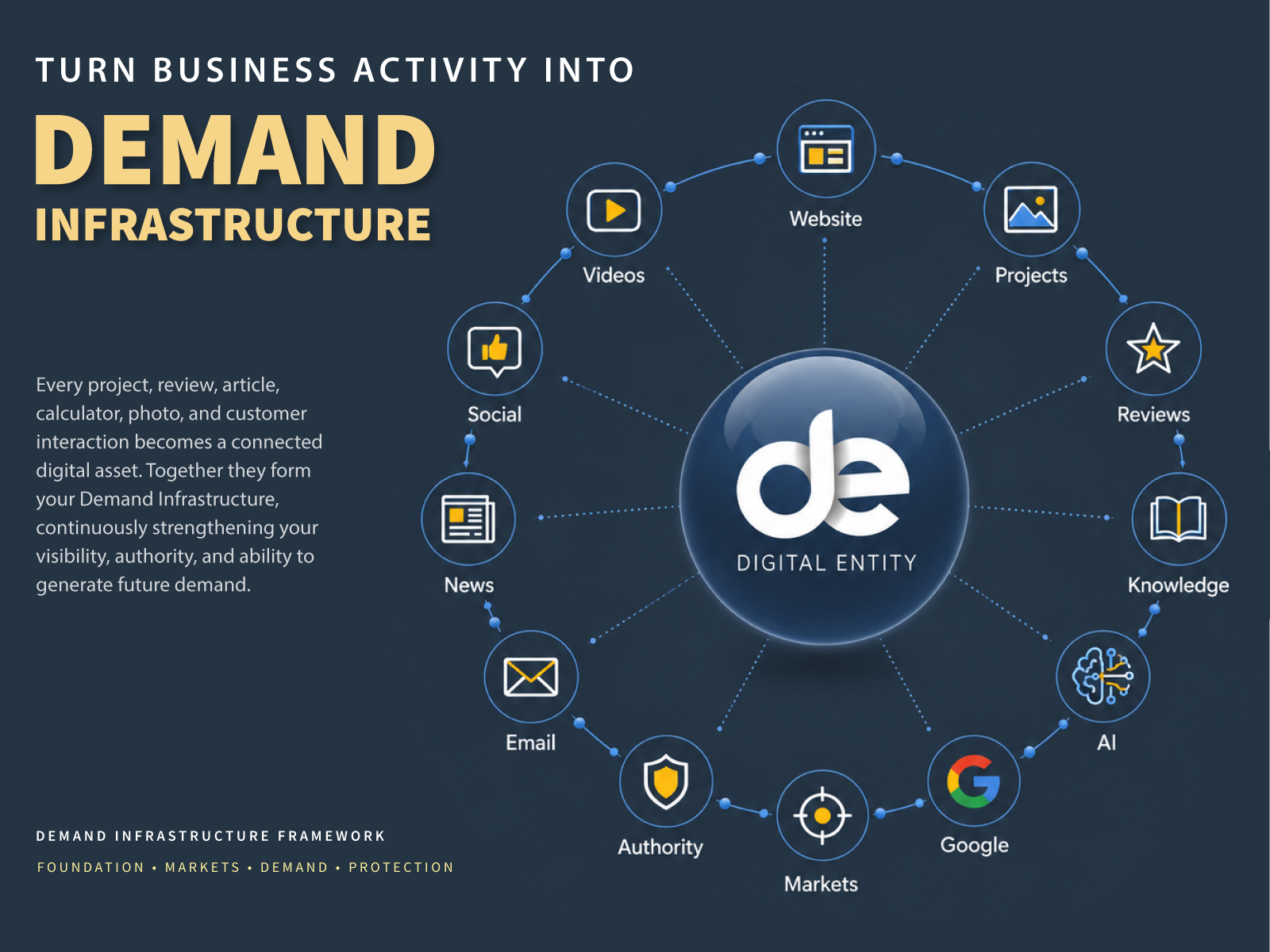
Every completed project creates new business assets. Project photos become portfolio content. Customer reviews strengthen trust. Technical solutions become knowledge articles. Installation experience becomes best practices. Operational data becomes business intelligence.
As your business grows, your Digital Entity continuously expands with new assets, knowledge, and structured data. Over time, it can connect with CRM, ERP, accounting, inventory, and other business systems to capture operational intelligence, automate publishing, and support advanced reporting, forecasting, and enterprise-scale decision making.
Not every business needs these capabilities from the beginning. But by continuously capturing and organizing new information, your Digital Entity becomes more valuable with every project, customer, and business decision - strengthening your Demand Infrastructure year after year.
Demand Infrastructure Is Business Infrastructure
Start building business value.
Campaign-based marketing generates attention through advertising, SEO, social media, email campaigns, and lead generation. Those activities remain important, but they are temporary by nature. A campaign ends. An advertisement stops running. A social media post disappears from the feed.
Demand Infrastructure is different. It creates the permanent systems that every future marketing effort can build upon. Your Digital Entity organizes business knowledge, connects information across platforms, and turns every completed project, customer interaction, review, and piece of content into a long-term business asset.
Marketing creates attention.
Demand Infrastructure ensures that every investment in attention makes the business itself more valuable.
Over time, the goal is no longer to spend more on marketing. The goal is to own an expanding portfolio of digital assets that continues generating visibility, authority, and customer demand long after individual campaigns have ended.
Campaigns create activity. Infrastructure creates business value. Build the infrastructure first, and every future marketing investment becomes more effective.
How Much of Your Business Are You Losing Every Day?
Every Day You Wait, Your Business Creates More Unorganized Assets.
Scattered data isn't just messy, it's lost demand. Every day it stays disorganized, you're bleeding customers you already earned.
Stop rebuilding from scratch every marketing cycle. Contact us today and start building Demand Infrastructure that compounds with your business, not against it.
Frequently Asked Questions
What Is Demand Infrastructure?
Demand Infrastructure is the collection of digital assets that continuously help customers discover, trust, and choose your business. Instead of relying solely on advertising or one-time marketing campaigns, it transforms completed projects, customer reviews, knowledge, calculators, videos, market pages, and other business assets into a connected system that generates long-term visibility, authority, and customer demand.
Unlike traditional paid and campaign-driven marketing, which often depends on ongoing spending to maintain visibility, Demand Infrastructure grows stronger as your Digital Entity expands. Every new digital asset contributes to the overall value of your business, creating a sustainable competitive advantage that continues generating demand long after the original work is complete.
How Is Demand Infrastructure Different From Digital Marketing?
Traditional digital marketing focuses on attracting attention through advertising, SEO, social media, email campaigns, and other promotional activities. These tactics can generate visibility and leads, but they typically require ongoing investment to maintain results. When campaigns end, much of that visibility disappears.
Demand Infrastructure also requires ongoing investment, but instead of investing primarily in third-party platforms and short-term campaigns, you invest directly in your own business. Every project, customer interaction, piece of knowledge, and operational insight becomes part of your Digital Entity Foundation, strengthening an infrastructure your business owns and controls. Rather than renting attention, you continuously build business value that supports your website, AI visibility, customer education, market expansion, and future marketing initiatives.
Marketing generates opportunities. Demand Infrastructure ensures those opportunities continuously strengthen your business. As your Digital Entity grows, it becomes a more valuable foundation for your website, AI visibility, customer education, market expansion, and future marketing initiatives.
What Is a Digital Entity?
A Digital Entity is the complete digital representation of your business. It consists of the connected information, content, digital assets, and business relationships that collectively define how your company is presented across websites, search engines, AI platforms, business directories, customer portals, and other digital channels.
Unlike a website, which is a single publishing platform, a Digital Entity spans your entire digital presence. It includes project libraries, customer reviews, photos, videos, technical knowledge, market pages, product information, business profiles, and other assets that communicate your expertise and support customer demand.
As your business grows, your Digital Entity grows with it. Every completed project, customer interaction, review, and published resource has the potential to strengthen your digital presence and create long-term business value when it is properly organized within a Digital Entity Foundation.
Why Isn't a Website a Competitive Advantage?
Professional websites have become a commodity. Modern platforms, templates, AI tools, and affordable development services make it possible for almost any business to launch a polished website. A website remains an important public representation of the business, but the visible interface alone is rarely difficult for competitors to reproduce.
The real competitive advantage lies in the Digital Entity Foundation behind it. This foundation captures, structures, and connects the business information created through operations, customer interactions, systems, and accumulated knowledge. It can power multiple websites, brands, market experiences, external platforms, reporting, integrations, and future technologies from one connected business system.
Competitors may be able to reproduce the appearance of a website. They cannot easily reproduce the structured knowledge, operational history, connected data, intelligence, relationships, and infrastructure developed inside your business over time. That underlying Digital Entity is what makes Demand Infrastructure increasingly valuable and difficult to replicate.
Why Are Websites Becoming Commodities?
Modern websites can be built quickly, affordably, and often with the same tools your competitors use. As a result, websites alone rarely differentiate businesses. Competitive advantage comes from the Digital Entity Foundation behind the website - a connected digital representation of your business that organizes operational knowledge, business information, customer interactions, and digital content into a system your business owns. As your business grows, your Digital Entity becomes increasingly valuable, strengthening your Demand Infrastructure and creating capabilities that competitors cannot easily replicate.
Why Invest Beyond a Website?
A website gives your business an online presence. A Digital Entity Foundation gives your business the infrastructure to grow.
A website presents information to customers. A Digital Entity Foundation captures, organizes, and connects the information your business creates every day - from operations and customer interactions to knowledge, projects, products, and business systems. This connected foundation supports not only your website, but also future market expansion, AI visibility, business intelligence, automation, customer portals, and other digital channels.
As your business evolves, a website typically requires manual updates. A Digital Entity Foundation grows with your business, continuously strengthening your Demand Infrastructure and increasing the long-term value of your digital presence.
A website is something customers visit. A Digital Entity Foundation is the business infrastructure that powers your website, digital channels, and future growth.
Can Traditional Marketing Replace Demand Infrastructure?
No. Traditional marketing and Demand Infrastructure serve different purposes. Marketing generates awareness, traffic, and leads, while Demand Infrastructure creates lasting business value through connected digital assets your business owns.
Advertising campaigns eventually end, budgets are exhausted, and platform algorithms change. Demand Infrastructure continues growing as your business accumulates completed projects, customer reviews, knowledge articles, videos, calculators, market pages, and other digital assets. Together, these assets strengthen your visibility, authority, customer trust, and future marketing performance - creating long-term business value that temporary campaigns alone cannot replace.
Why Do You Focus on Building Demand Infrastructure Instead of Marketing Campaigns?
Marketing campaigns are designed to generate attention. Demand Infrastructure is designed to strengthen your business.
While marketing invests in acquiring customers, Demand Infrastructure invests in the projects, knowledge, customer relationships, and operational information your business already owns. Every project completed, customer served, process improved, and piece of business knowledge captured strengthens the foundation that supports your website, AI visibility, customer experience, future marketing, and long-term growth. Marketing generates opportunities. Demand Infrastructure ensures those opportunities continue creating business value.
Does Every Business Need a Digital Entity?
Every business already creates valuable business information. Projects, customers, products, knowledge, reviews, documents, and business processes are generated through everyday operations. A Digital Entity brings this information together into a connected digital representation of the business that supports Demand Infrastructure.
Without a Digital Entity, this information remains scattered across websites, software platforms, cloud storage, email, and individual devices - making it difficult to reuse, manage, and leverage as the business grows.
Can You Provide Growth Services Without a Digital Entity Foundation?
Yes, but you're building on a weaker foundation. Demand Infrastructure can be developed on almost any website platform, but without a Digital Entity Foundation, growth usually depends on more manual work, disconnected information, duplicate content, custom integrations, and increasingly complex maintenance. As your business expands, the cost of building and maintaining Demand Infrastructure rises significantly because information must be managed across multiple systems rather than from a single connected foundation. Many growing businesses eventually invest in dedicated IT staff, developers, consultants, or external agencies simply to manage the complexity that accumulates over time.
A Digital Entity Foundation reduces the long-term cost of growth. By organizing business information from the beginning, it makes it easier to expand into new markets, support additional websites, connect business systems, automate processes, and continuously strengthen your Demand Infrastructure without repeatedly rebuilding what already exists.
Why Do You Start With an Assessment?
We don't just evaluate websites - we evaluate your ability to build Demand Infrastructure.
Every business has different objectives, operational processes, growth plans, and technical requirements. Our assessment examines how your business information is currently organized, how your website and systems support your objectives, and whether your current approach can support the Demand Infrastructure you want to build.
Based on your goals, we identify opportunities to establish or strengthen a Digital Entity Foundation, reduce long-term complexity, and recommend the next steps for sustainable growth.
Why Do You Call It a Digital Entity Instead of a Website?
Because a website is only one representation of your business. A Digital Entity is the structured digital representation of the business itself - bringing together the information created through daily operations into a connected system. Your website, customer portals, AI, business profiles, reports, and other digital channels simply present different parts of that Digital Entity to different audiences.
What Is the Difference Between Demand Generation and Lead Generation?
Lead generation focuses on converting existing demand into inquiries, quote requests, and customers. It targets people who are already searching for your products or services and encourages them to take action.
Demand generation focuses on increasing awareness, educating potential customers, and building trust before they are ready to buy. Through valuable content, completed projects, customer reviews, videos, knowledge resources, and other digital assets, it helps create future demand while strengthening your brand's visibility and authority.
Demand Infrastructure supports both. By building and connecting the digital assets your business owns, it creates a long-term foundation that improves demand generation, strengthens lead generation, and continues creating business value long after individual marketing campaigns have ended.
Is Demand Infrastructure a One-Time Project?
No. Demand Infrastructure evolves as your business evolves. Every new project, customer, product, service, process improvement, and operational change creates new information that should become part of your Digital Entity. As your business grows, your Digital Entity Foundation must continuously reflect those changes to remain an accurate digital representation of the business.
Building Demand Infrastructure is the ongoing process of capturing, organizing, connecting, and maintaining business information so it can support your website, customer experience, market expansion, AI visibility, operational reporting, and future technologies. The stronger your Digital Entity becomes, the easier and more cost-effective it is to grow your business without repeatedly rebuilding your digital infrastructure.
Explore the Demand System
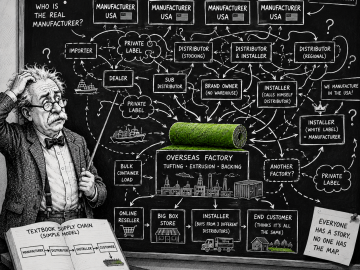
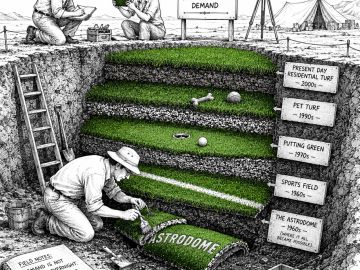
The strongest installation businesses are built by understanding more than where the next lead comes from. Explore how synthetic turf demand develops, how markets are created, how digital authority accumulates, and how the infrastructure behind your business can turn today's projects into future demand.



Build Demand Across the Markets You Serve
Demand Infrastructure connects your digital assets, market knowledge, and business capabilities to the customers and projects you want to reach. Explore residential, commercial, and public synthetic turf markets to identify opportunities, strengthen market presence, and build demand where your business can create the most value.



Digital & Business Solutions for Synthetic Turf Businesses
Build the digital systems behind sustainable market growth. Explore solutions for websites, market expansion, search and AI visibility, business automation, integrations, and digital asset development for synthetic turf businesses.