
How to Start With an Inexpensive Website (Without Falling Into an Expensive Trap)
August 1, 2026
Most businesses don't need a $20,000 website.
They also don't need a $79 website.
What they actually need is a website they can afford without accidentally destroying years of future growth.
There is a big difference.

Quick Navigation
Start Small. Build Smart.
Whether you're launching a local synthetic turf installation business or becoming a regional distributor, every investment competes with equipment, inventory, vehicles, insurance, and marketing. A website doesn't need to consume your entire startup budget.
Starting with a simple website is often the right decision.
Starting with a website that cannot grow with your business isn't.
The goal isn't to build the biggest website on day one. The goal is to build a foundation that can expand into new cities, new services, and new markets without forcing you to start over.
Why Most Starter Websites Aren't Built for Growth
In 2026, almost anyone can launch a professional-looking website using Wix, Squarespace, Webflow, WordPress, or one of the many AI website builders. That's great news for new businesses because getting online has never been more affordable.
The challenge is that your competitors have access to the same tools.
If everyone can build a similar-looking website in a few hours, your competitive advantage is no longer the website itself. It comes from everything your business builds over the years - completed projects, customer reviews, service pages, local market coverage, educational content, photos, videos, and the authority those assets create.
When you search Google for "artificial grass" or "synthetic turf," you're not competing against other small local installers.
You're competing with companies like Home Depot, Lowe's, SYNLawn, Purchase Green, and other national brands that have spent years building their digital presence.
They have thousands of pages, established authority, extensive project portfolios, nationwide market coverage, and digital foundations that have been growing for years.
Yet, Google's first page isn't reserved exclusively for national brands. Smaller local installers regularly appear alongside them - not because they have larger marketing budgets, but because they've built a strong presence within the markets they serve. They didn't try to compete with Home Depot across the entire country. They focused on becoming the best answer for their customers, one city, one service, one project, and one review at a time.
So instead of getting discouraged and treating your website as just another expense with little long-term value, do what many of your competitors never considered.
What Can Be Your Competitive Advantage in 2026?
Build your website the same way you build your business.
You don't buy every truck on day one. You don't start with ten trailers or a warehouse full of equipment. You begin with what you need - a truck, a carpet knife, a vibrating plate compactor - and you expand as your business grows.
Your website should follow the same principle.
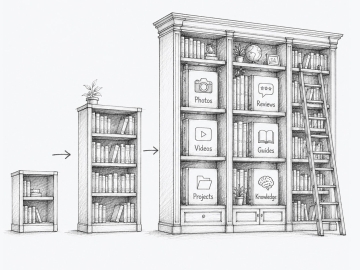
Start with a simple website. Then let every completed project, every customer review, every service you add, every city you enter, and every article you publish become another investment in your business. Over time, those investments compound into something your competitors can't buy overnight: authority, visibility, and a digital presence that continues to create demand.
Your first website might only include five or ten pages. That's perfectly fine. There is only one principle you should never compromise on:
Your website must be able to grow alongside your business.
In the beginning, you'll probably invest in advertising to win your first customers. You may rely on Google Ads, Facebook or Instagram campaigns, referrals, or even leads provided by your manufacturer. That's normal.
But the goal isn't to depend on those channels forever.
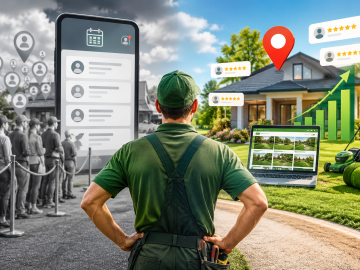
Every project you complete, every customer review you earn, every city you expand into, every service you add, and every article you publish should strengthen your own digital presence. Over time, your website becomes more than a place to display your business - it becomes a business asset that generates demand on its own.
That's how successful synthetic turf companies grow. They don't simply buy leads year after year. They gradually reduce their dependence on rented demand by building demand they own.
Your competitors can buy the same website template. They can't buy the business you've built through it.
Ask These Questions Before Hiring Anyone
A low price isn't automatically a bad deal. But before you hire anyone to build your website, make sure you understand what you're buying.
Most people ask how much a website costs today. Instead, ask what it will cost when your business succeeds.
- If I want to expand into 50 cities, how much would it cost to add them?
- If I want to publish 200 synthetic turf products with specifications, multiple photos, and downloadable brochures, how would that work?
- If I complete 1,000 installation projects, where will they all go?
- If I add commercial, playground, pet turf, and sports field divisions, can my website grow with them?
- If I hire another installation crew and expand into a new state, what changes will be needed?
- If my business triples in size, will this website still be the right platform?
These questions aren't about today's website. They're about tomorrow's business.
A good web designer should be able to explain not only how they'll build your website, but how it will continue supporting your business as it grows.
How to Know What You're Really Buying
Here's the hard truth. Most starter websites aren't built for your business. They're built for every business. The template may have originally been designed for a plumber, roofer, landscaper, or restaurant. The photos, colors, and text change, but the underlying structure stays the same.
That's why so many websites look different yet feel strangely familiar. There's nothing inherently wrong with using a template. In fact, it can be a smart and affordable way to launch a new business. The mistake is assuming that a template is also a long-term business strategy.
Your synthetic turf business is unique. Your projects, products, service areas, installation methods, customer questions, and growth plans are unique too.
There is a significant difference between a website that looks impressive and a website that consistently generates demand.
One is designed to impress visitors for a few minutes. A beautiful homepage, smooth animations, and modern design can certainly build trust. But customers don't choose a synthetic turf installer because the website has the latest scrolling effects or animated transitions.
A demand-generating website isn't built around visual effects. It's built around helping customers find your business, understand your expertise, and trust you enough to make contact.
We've seen companies invest hundreds of thousands - or even millions of dollars - in beautiful digital experiences that never produced the business growth they expected.
At the same time, you've probably seen the opposite.
A simple website. Maybe even one that looks a little outdated. Yet it consistently appears near the top of Google's search results for valuable keywords. Behind that modest design is often a business installing millions of dollars' worth of synthetic turf every year.
The difference isn't usually the homepage.
It's everything behind it.
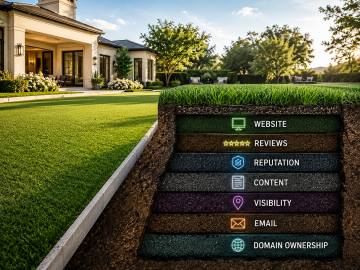
The projects they've documented. The markets they've expanded into. The knowledge they've published. The reviews they've earned. The authority they've built over years of serving customers.
Many businesses - not just in the synthetic turf industry - invest in websites that impress other business owners, believing they're buying a system that will generate demand.
Those are not always the same thing.
A website should certainly look professional. But its greatest value isn't how impressive it looks on launch day.
Its greatest value is whether it continues bringing qualified customers to your business year after year.
What Your Website Should Do for Your Business
A website that generates demand isn't just another marketing expense. It changes how your business grows.
Instead of relying entirely on paid advertising, manufacturer referrals, or word-of-mouth, your website gradually becomes another source of qualified customers.
Every completed project strengthens your portfolio. Every customer review builds trust. Every new service expands your market. Every article answers another customer's question. Every city page creates another opportunity to be discovered.
Individually, these improvements may seem small. Together, they create something much more valuable: a business that becomes easier to find, easier to trust, and less dependent on buying attention.
Do You Actually Need a Content Management System (CMS)?
When a web designer says, "We'll build your website," one of the first questions you should ask is:
What CMS will you use?
Most business owners have heard names like WordPress, Wix, Squarespace, Webflow, Joomla, or Drupal. These aren't websites.
They're Content Management Systems (CMS) - software designed to help people create, edit, and organize website content.
Think of a CMS as the administration panel behind your website.
Its primary purpose is to make it easier to:
- create new pages
- edit existing content
- update phone numbers or business hours
- publish blog articles
- upload photos and documents
That's what a CMS does.
What many business owners don't realize is that Google, AI search systems, and your customers never see your CMS.
They only see the finished web pages your CMS produces.
They don't know whether those pages came from WordPress, Wix, a custom system, or a simple HTML file.
To them, only the final result matters.
Many synthetic turf companies launched websites ten years ago and have barely updated them since. They never publish articles. They rarely change services. Their phone number and contact information remain the same.
In those cases, a powerful CMS may provide very little value because it's rarely used. A CMS exists to help people manage content. If you're not managing content, you're carrying the overhead of software you rarely use. CMS adds another layer of software that must be maintained, updated, secured, and optimized for performance.
On the other hand, if your business plans to regularly publish projects, expand into new cities, document turf products, answer customer questions, and grow your online presence, then choosing the right CMS becomes much more important.
The question isn't:
"Which CMS is the best?"
The better question is:
"How will my business actually use it?"
What About AI Website Builders?
AI website builders have changed how quickly a business can get online.
Today, you can describe your business in a few sentences and have a professional-looking website within minutes. For many startups, that's an incredible improvement over spending weeks or months building a first website.
The question isn't whether AI can build a website. It can. The question is what you actually receive when it's finished.
Some AI platforms generate standard HTML, CSS, and JavaScript that you own and can host anywhere.
Others generate applications that remain tied to their own platform. You may not receive a complete, portable website that can simply be copied to another hosting provider.
If your long-term plan is to own and continuously grow your digital presence, understand exactly what you're buying.
Ask questions like:
- Can I download the complete website?
- Can I host it anywhere?
- If I stop paying, what happens to my website?
- Can another developer continue building it?
- If another developer takes over, how much will it cost to continue building?
- Who owns the code and content?
AI is a new tool for launching a business.
But before you build your entire digital future on one platform, make sure you're building something that provides business value and generates demand.
Build an Asset, Not Just a Website
There is nothing wrong with starting with an inexpensive website. For many new synthetic turf businesses, it's the smartest financial decision they can make. The mistake isn't starting small. The mistake is building something that has to be replaced just as the business begins to grow.
A website should become more valuable every year. Every completed installation, every customer review, every new service, every city you expand into, every product you publish, and every article you write should strengthen your digital presence. Over time, your website should reflect the experience and reputation your business has earned.
The technology you use today is far less important than the value you continue building over time. Website builders will change. AI tools will improve. New platforms will appear while others disappear. What should remain is the collection of business assets you've created and the demand they continue generating.
Build your website the same way you build your business. Invest in it gradually. Expand it as new opportunities arise. Protect what you've already created. A website isn't valuable because of the day it launches. It's valuable because of everything your business adds to it over the years.
Your competitors can buy the same website template. What they can't buy are your projects, your customers, your reputation, your knowledge, and the digital assets you've spent years building. Those are the things that create a lasting competitive advantage.
Related Insights



Build the Website Around the Business
A website should represent your markets, services, assets, and business structure—not force them into a generic template. Explore website solutions designed around how synthetic turf businesses actually operate and grow.