Why Growing Businesses Need Systems, Not Just Websites
Websites help businesses get started. Systems help businesses grow.
Most business owners think growth means getting more customers. In reality, growth often changes the business itself. New locations, additional crews, expanded service areas, and larger customer bases create new challenges that a website alone cannot solve. Over time, successful companies develop systems that help them manage complexity, maintain consistency, and continue growing without losing control.

Every Business Starts With a Website
Every turf company starts with one website.
A few pages, a contact form, a project gallery, and a phone number are often enough to get a new business online. Add a Google Business Profile, a Facebook page, Yelp, and a handful of reviews, and the company has a basic online presence.
For many businesses, this is where the journey begins.
Then something interesting happens.
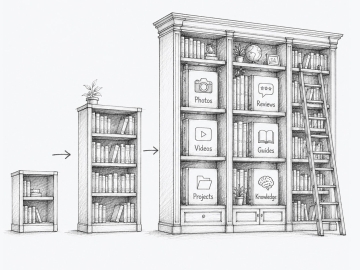
As the business grows, the website often remains at the center, but additional websites begin appearing around it. A company that once served a single city may create dedicated pages for neighboring markets. A manufacturer may support distributors across multiple states. An installer may launch separate websites for different brands, products, or service areas. Before long, what began as a single website becomes a collection of interconnected online properties.
Why Large Organizations Look Different
This pattern is particularly visible among larger organizations in the turf industry. Search for artificial grass, putting greens, playground turf, or pet turf in many markets across the United States, and companies such as SynLawn, Home Depot, Purchase Green, Walmart, and Celebrity Greens frequently appear near the top of search results. While each company operates under a different business model, they have one thing in common: their online presence extends far beyond a single website.
A casual visitor may only see a corporate website, but behind the scenes there are often location pages, dealer pages, product catalogs, business profiles, project galleries, social media channels, press releases, and other digital assets working together. Some organizations support networks of independent dealers. Others operate multiple locations, brands, or product lines. Over time, these assets accumulate and reinforce one another, creating a much larger online footprint than a single website could achieve on its own.
At first glance, it may appear that these organizations simply have better websites. In reality, they are often operating something much larger. What customers see is a collection of pages. What the business sees is a system designed to support growth, communication, visibility, and customer relationships across multiple markets.
Better Websites Are Not Always the Answer
This becomes particularly interesting when you examine some of these websites more closely. Many business owners assume companies appearing at the top of search results must have technically superior websites. In the turf industry, that assumption is often incorrect.
Some of the most visible organizations have pages that load slowly, outdated content, incomplete structured data, inconsistent user experiences, or technical issues that many consultants would immediately criticize. Yet they continue attracting customers, earning recommendations, and maintaining strong visibility across multiple markets.
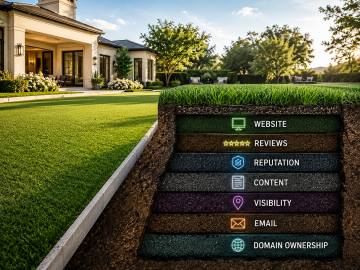
The reason is that business growth and online visibility rarely depend on a single website. A website is only one asset within a much larger system. Brand recognition, local presence, dealer networks, reviews, content, public relations, customer relationships, and years of accumulated authority all contribute to the outcome. The website remains important, but it does not operate in isolation.
This should be encouraging for smaller businesses. It suggests that success is not reserved for companies with perfect websites. More often, it belongs to organizations that consistently build valuable assets, strengthen their reputation, and support customers over time.
Why Local Businesses Still Compete
The fact that larger organizations do not always have technically superior websites reveals something important about how visibility works online.
Search engines and AI systems are not evaluating websites in isolation. They are trying to identify the most relevant and trustworthy answer for a specific customer. In many situations, a local installer with strong reviews, detailed project documentation, clear service information, and an active presence in the community may be more relevant than a national organization.
This is one of the reasons local businesses continue appearing alongside much larger competitors. While national brands benefit from authority, recognition, and scale, local companies often possess something equally valuable: proximity to the customer. They understand local markets, document projects in their service areas, answer questions specific to their communities, and build trust through direct relationships with homeowners.
The market for synthetic turf has become increasingly competitive, and large organizations undoubtedly have advantages. They have larger budgets, more content, stronger brand recognition, and broader networks of digital assets. Yet customers do not hire websites. They hire companies.
The businesses that succeed locally are often the ones that combine strong craftsmanship with strong business assets. They earn reviews, document their work, answer customer questions, maintain accurate information, and continue building trust over time. These efforts may seem small individually, but together they create a foundation that helps businesses compete year after year.
This is where the conversation begins to shift. The question is no longer whether a local installer can compete. The more interesting question is how successful businesses build systems that allow them to compete consistently as they grow.
When Systems Begin to Emerge
This is one of the reasons growing businesses eventually stop asking, "How do we build a better website?" and begin asking, "How do we build a stronger business?"
A website can help customers learn about a company. It can showcase projects, answer questions, and provide contact information. Those functions remain important regardless of company size. However, as a business expands, new challenges begin to emerge. Additional service areas are added. More projects are completed. New employees join the organization. Customers interact with the business through multiple channels. Reputation becomes increasingly important. Consistency becomes harder to maintain.
The website remains. The business changes.
This is often the point where systems begin to emerge.
Not because a business owner decides to build a system, but because growth creates new requirements. Information must be organized. Communication must be coordinated. Customers need consistent experiences. Marketing, sales, operations, and reputation management become increasingly connected. Processes that once lived inside a single person's head gradually become part of the organization itself.
Many business owners encounter this transition without recognizing it. They continue viewing their website as an isolated marketing tool while the business around it becomes increasingly dependent on a network of assets, processes, and relationships.
Looking Beyond the Website
The question is no longer whether a small business can compete.
The more interesting question is how successful businesses build systems that allow them to compete consistently year after year.
Most businesses start with a website.
Growing businesses eventually build systems.